In 2008, I was a young interdisciplinary graduate student living in New Mexico working on my thesis, trying to make sense of the world through the lens of comparative mythology, Black liberation movements, and preservation of Indigenous memory through oral transmission of knowledge.
That summer I wrote a letter to a man whose voice had shaped generations long before I was born: Imam Jamil Abdullah Al-Amin, formerly H. Rap Brown; freedom fighter, Black Panther, legendary SNCC chairman, and one of the most targeted men in modern U.S. political history. By then he was already years into a prison sentence for a crime that’s been contested since day one:
- No fingerprints on the weapons.
- Eyewitness descriptions didn’t match him.
- Another man, Otis Jackson, confessed in 2002 to committing the shooting but the courts refused to hear it.
- COINTELPRO-style surveillance followed him for decades prior.
- Continuous allegations of misconduct, suppressed evidence, and political retaliation.
I didn’t expect a reply, particularly on the questions I asked. Political prisoners are flooded with letters, requests, speculation, conspiracy theories, agendas. I sent mine anyway.
I wrote to him because of Tupac.
Not the celebrity, but the mythos. The revolutionary archetype of Tupac Amaru. The echoes of something ancient moving through his work from the ancestors. The same echoes Imam Jamil embodied in his life.
I was researching Tupac’s mythic significance for a book project, which would evolve into the founding of the "Truth About Tupac Movement" the following year. A few significant pieces of the story led back to Imam Jamil: Afeni’s counsel, rumors about spiritual conversations, questions around Islam, and the imagery in “Wonder If Heaven Got a Ghetto,” which was filmed at a clandestine Mosque, in New Mexico.
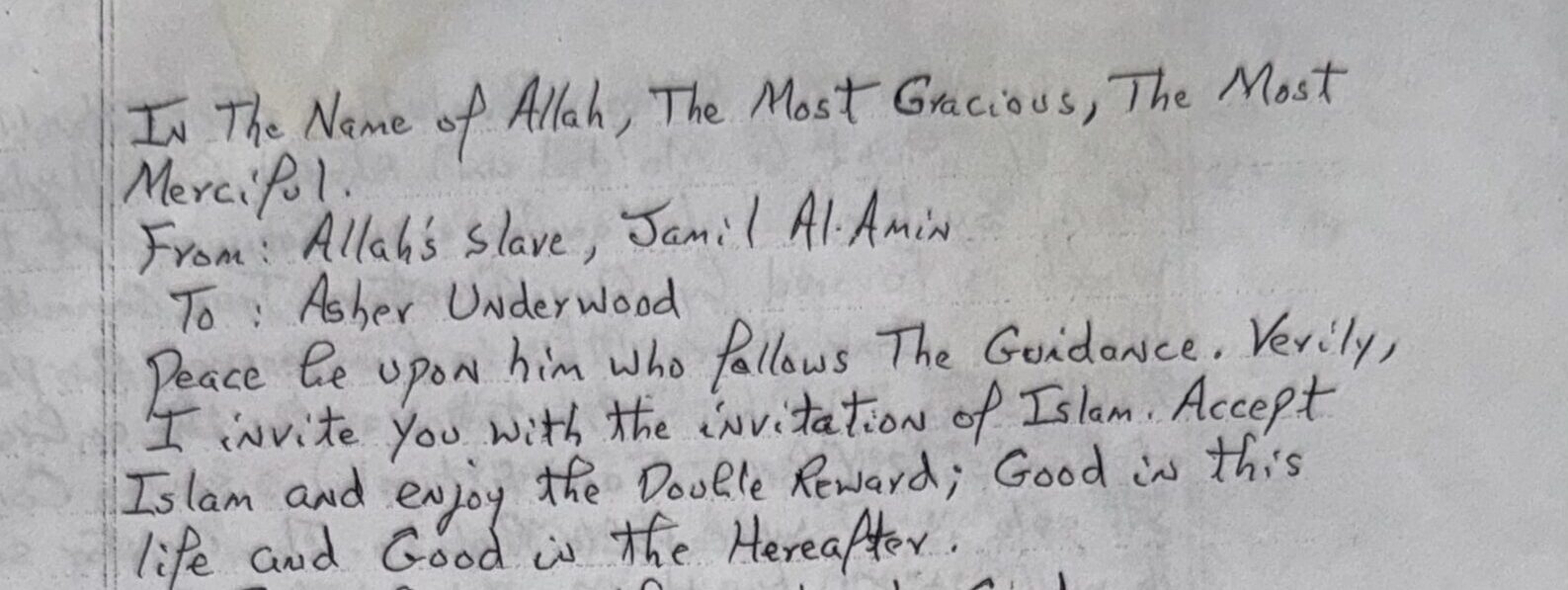
A few weeks later a letter arrived.
Handwritten.
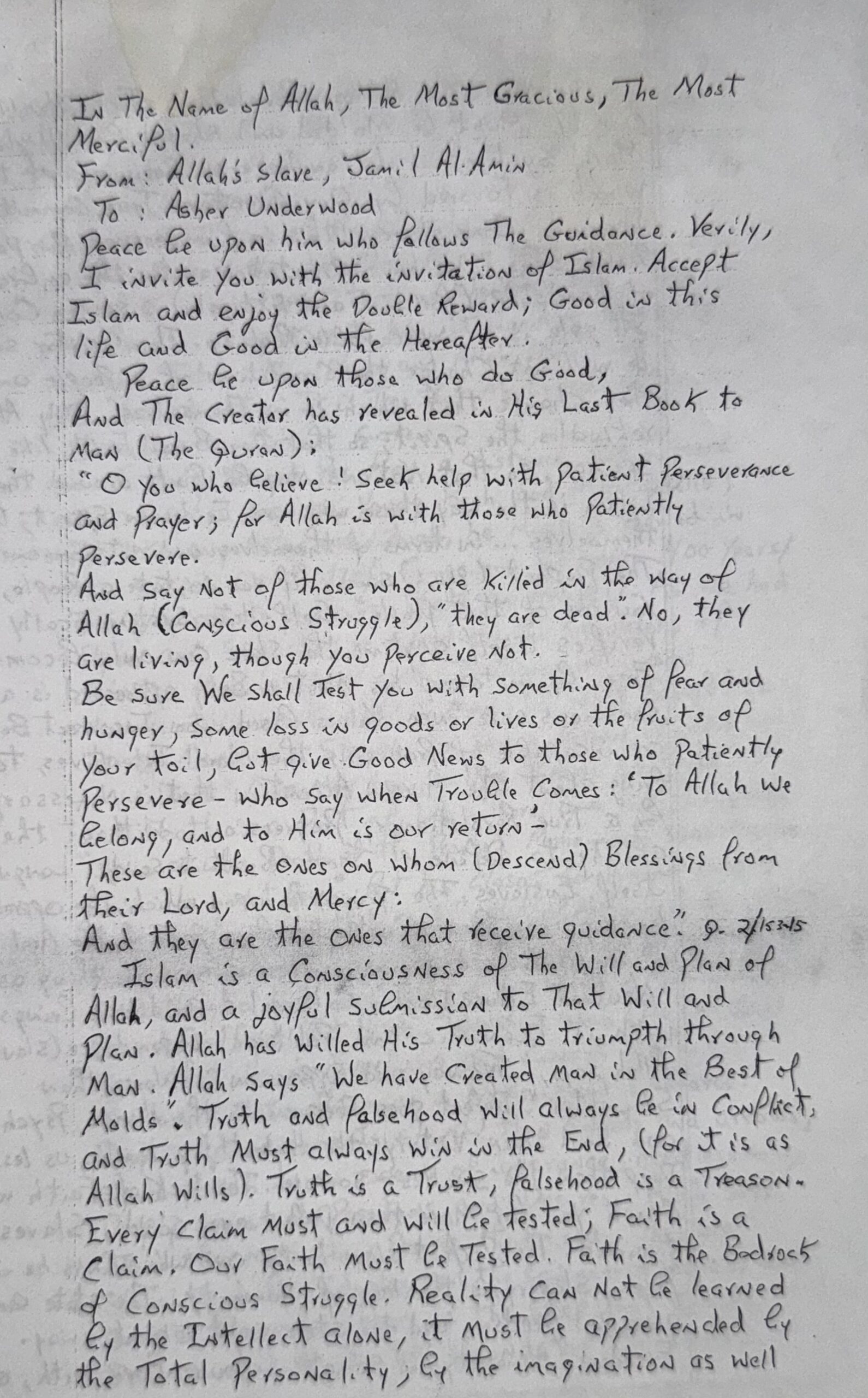
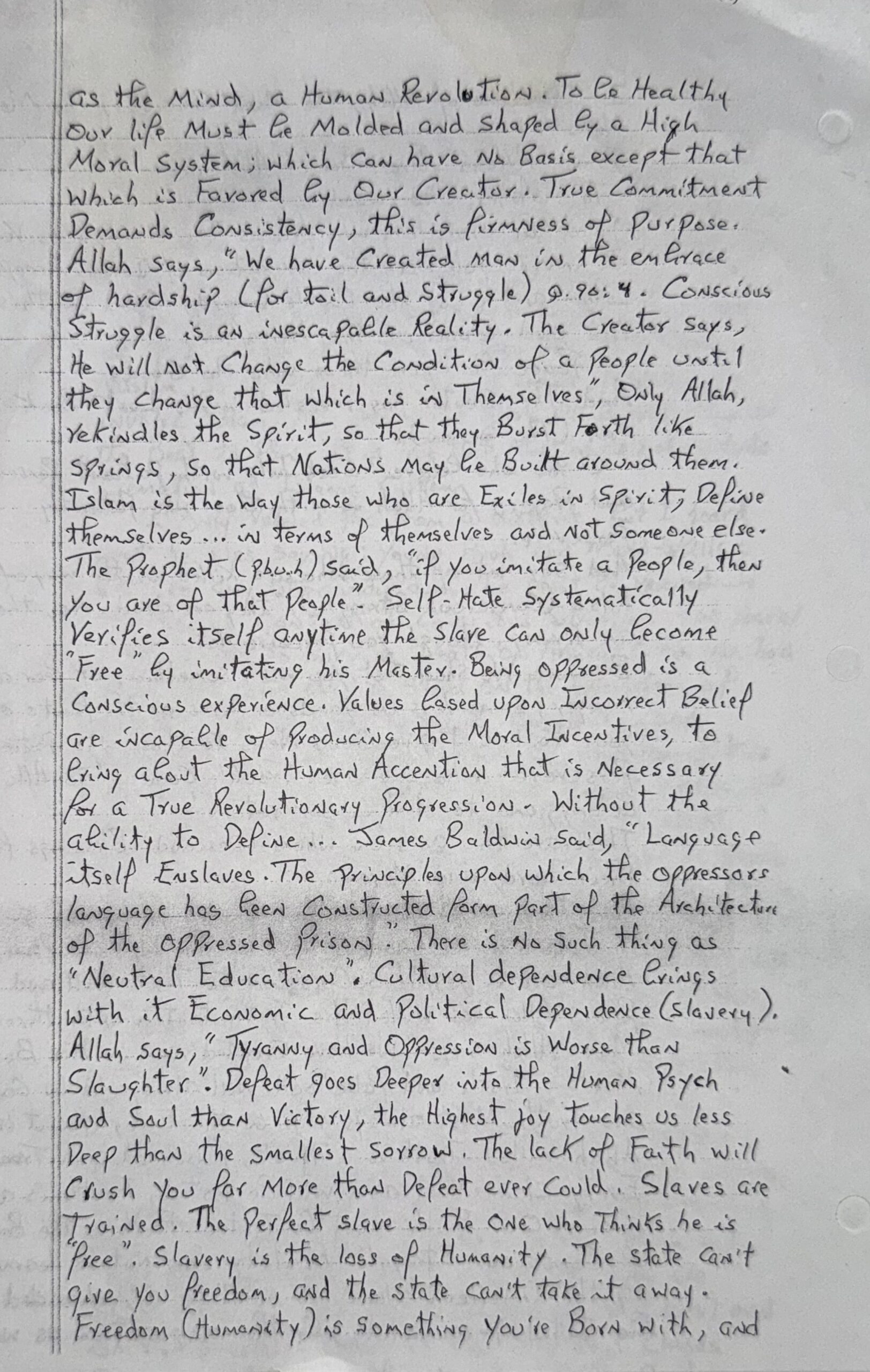
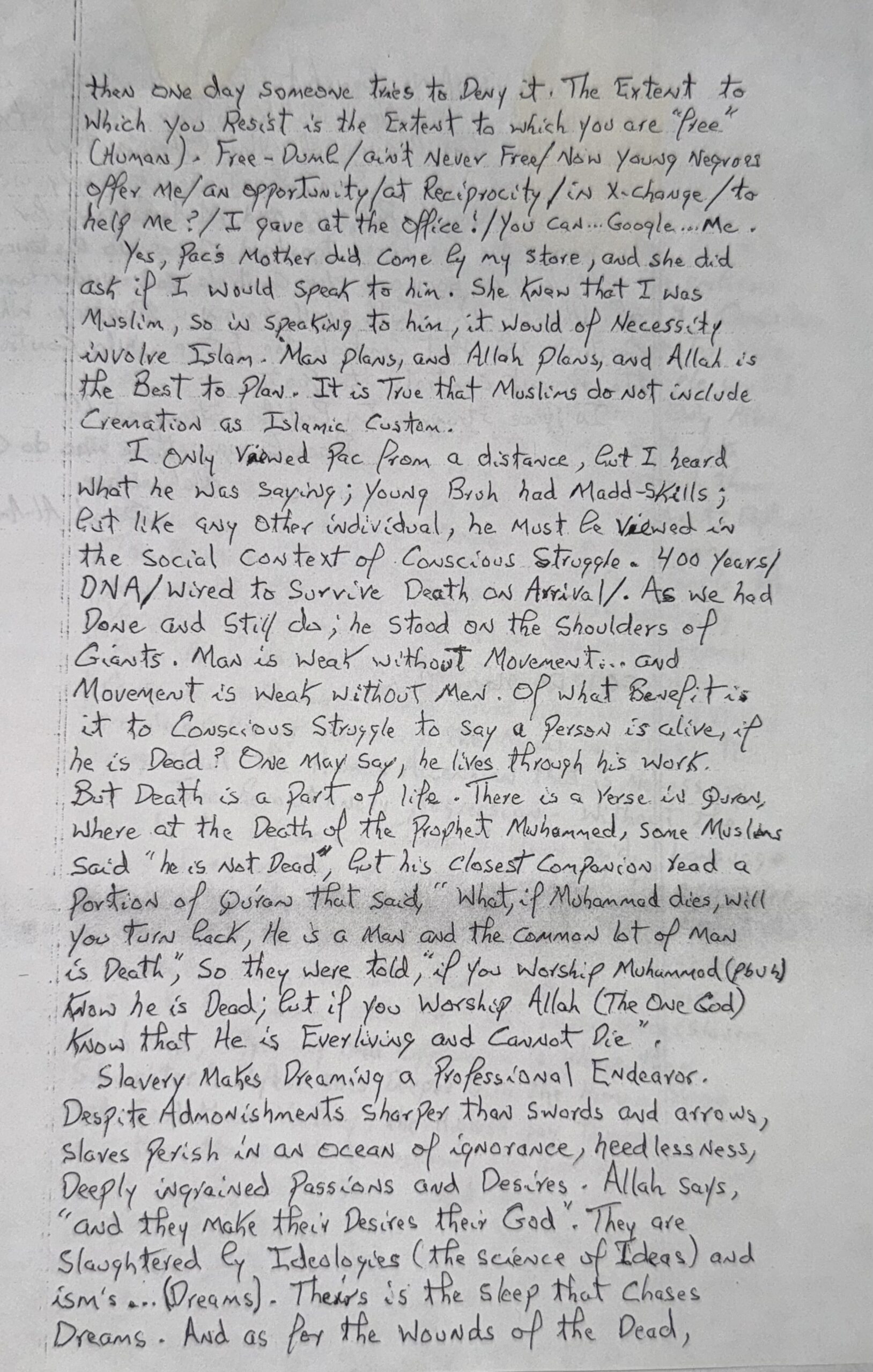
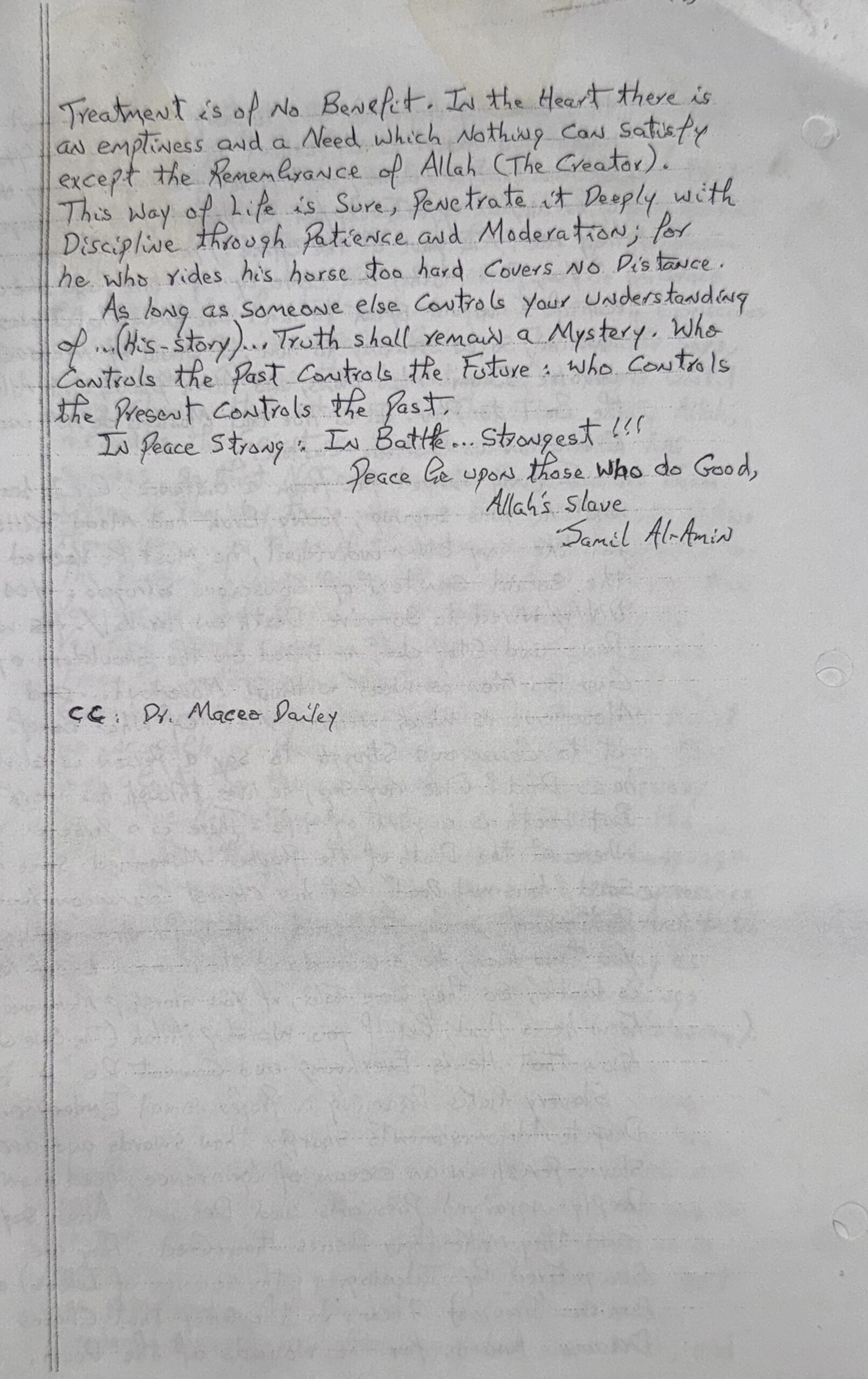
Four pages.
Clear.
Disciplined.
Spiritual.
Revolutionary.
And signed:
“Allah’s slave,
Jamil Al-Amin.”
His opening line got straight to the point:
“I invite you with the invitation of Islam. Accept Islam and enjoy the double reward.”
Seventeen years later, after my own 3 decade journey into the faith, that single sentence still hits hard as an anvil.
The letter wasn’t just religious. It was deeply political and philosophical; a four page masterclass in consciousness, truth, struggle, and framework.
He quoted the Qur'an; but not randomly. Precisely in the places where my own academic questions sought to understand the spiritual significance of:
- Struggle (Qur’an 29:69 & 90:4)
- Patience/ Sabr (Qur’an 2:153 & 2:155–157)
- False histories i.e. “Fake News”/ ‘Ifk/ Batil (Qur’an 17:81; 39:29; & 49:6)
- The psychology of oppression/ Nafs/ Ghulm (Qur’an 2:193;14:22; & 28:4)
- Movement-building i.e.”Conscious Struggle”/ Ummah (Qur’an 3:104 & 61:4)
- Standing on the shoulders of giants (Qur’an 4:163 & 12:111)
- Who controls the past i.e. “Historical Memory” (Qur’an 12:76 &30:9)
- Who controls the future i.e. ‘Destiny”/ Qadr (Qur’an 8:30 & 54:49)
He schooled me, in the way only an elder revolutionary can, that:
“Truth is a trust. Falsehood is a treason.”
“The perfect slave is the one who thinks he is free.”
“As long as someone else controls your understanding of his-story, truth shall remain a mystery.”
He answered my Tupac questions not by indulging conspiracy, but by elevating the lens:
“And say not of those who are killed in the way of Allah (Conscious Struggle), “they are dead.” No, they are living, though you perceive not.”
“Of what benefit is it to say a person is alive, if he is dead? One may say he lives through his work.”
I had asked him about Afeni and the story I’d heard from my professor Dr Maceo Daily, that she had come to him, and that she had requested for him to speak to Pac. To which he replied,
“Yes, Pac’s Mother did come by my store, and she did ask if I would speak to him. She knew that I was Muslim, so in speaking to him, it would of Necessity involve Islam. Man plans, and Allah Plans, and Allah is the best to Plan.”
He didn’t know me.
He had no reason to write back.
But I’d like to think he recognized something in the questions I was asking; something genuine in my path and searching for truth that even I didn’t fully understand yet.
Looking back now almost two decades later, especially after his passing on November 23, 2025 after years of medical neglect, this letter, which took me weeks to find in storage, feels like part of a chain or transmission from one generation of seekers, strugglers, and truth-tellers to the next.
And it took me nearly two decades to realize its full weight and impact on my life’s work.
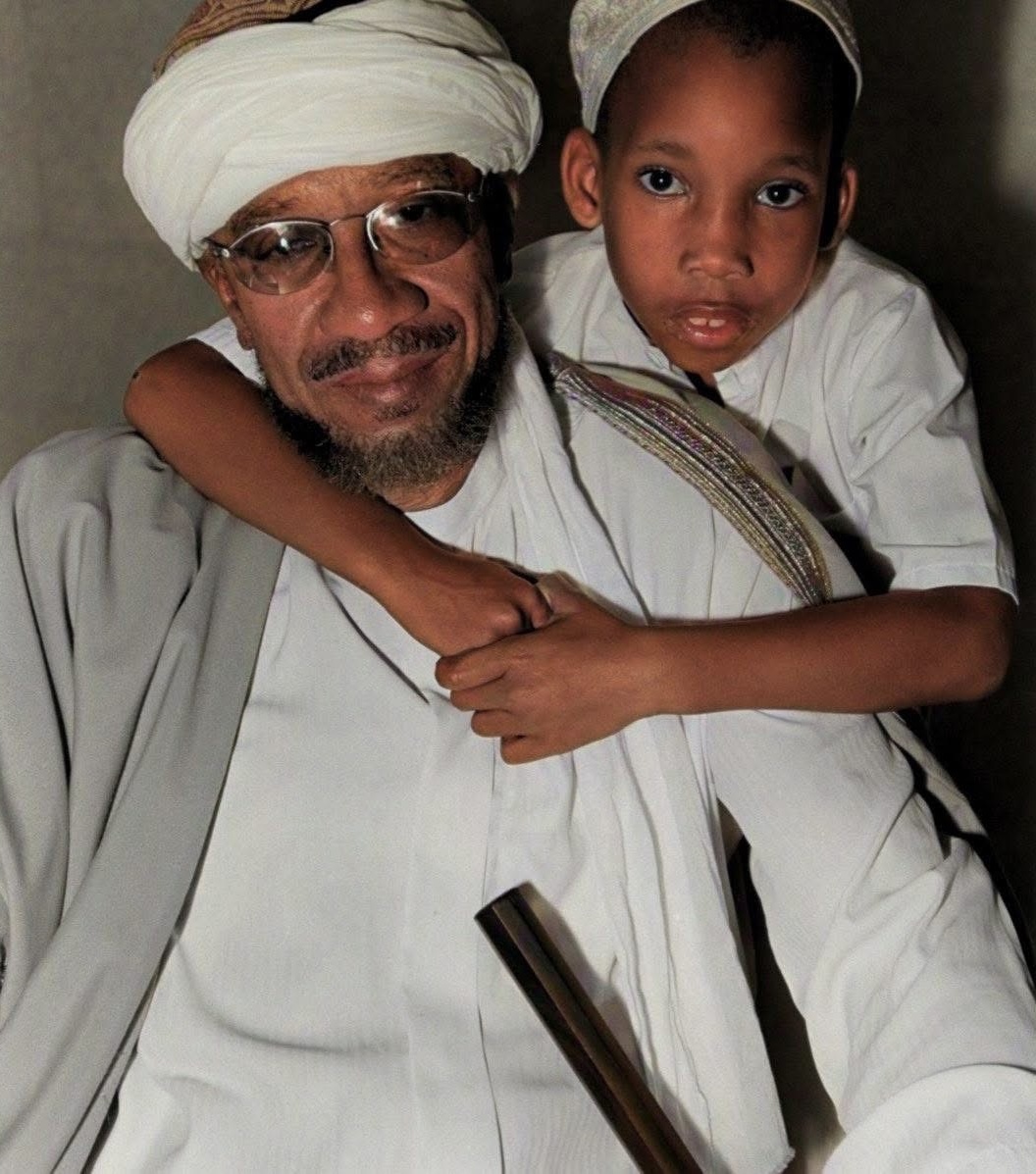
Imam Jamil was one of the first people to invite me to Islam.
He didn’t preach to me, or debate. He invited me to enjoy the double reward of guidance in this life and the next.
Quietly.
Gently.
Firmly.
And it has stayed with me all these years.

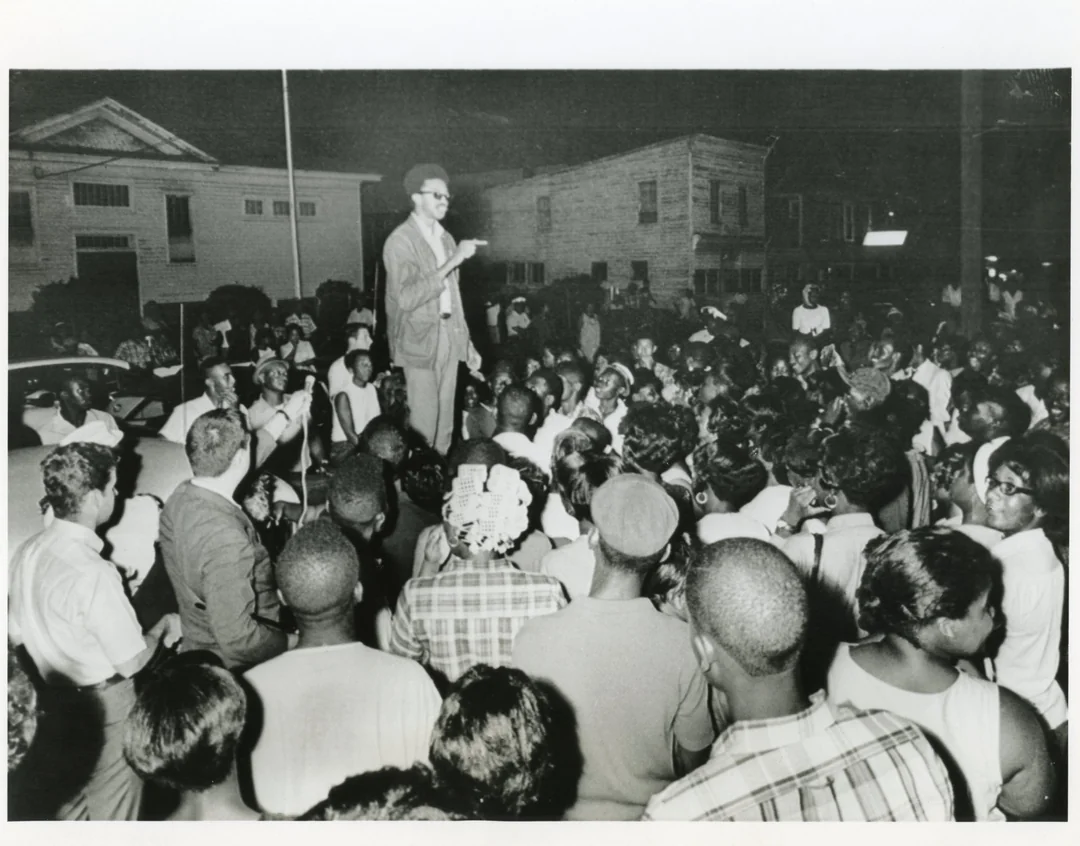
Today, as I continue my work across media, comparative history, liberation theology, global justice conversations, and my “Tupac studies”, I see how much of my trajectory he anticipated in those handwritten lines: confronting propaganda, challenging false narratives on the daily, sharpening moral compass, and commitment to a struggle bigger than self or any one individual.
If there is anything I regret, it’s that I didn’t do more for him when I was younger, before life, family, work, and a thousand battles pulled me in different directions. I also learned from the Imam’s son, Kairi Al-Amin, that my professor and close friend of Iman Jamil, died in 2015. But the influence of both of these great men has stayed alive in me:
To keep the truth alive.
To always challenge the state’s version of history and false narratives.
To understand struggle as spiritual, not performative.
To remain patient and persevere at all costs.
And to stand on the shoulders of the giants while becoming one for the next generation.
His final lines to me:
“In peace strong… in battle strongest!!!
Peace be upon those who do good.”
May Allah grant him mercy, accept his struggle, reward his sacrifices, and raise him among the righteous. And may we carry forward what he planted through Discipline, Patience, and Moderation.
“For he who rides his horse too hard covers no distance.”
Jamil Al-Amin (like the giants before him), lives through his work.
And through those he influenced; even hidden away behind bars.
As Jamil’s Attorney Maha Elkolalli expressed in the recent press release:
“The fight to clear his name is not over… It is a travesty that he was not permitted to spend his final days with his family.”
The family’s grief is real, human, and rooted in love. From Kairi Al-Amin:
“We thank every single person who prayed, stood, marched, researched, wrote, advocated, and fought to clear my father’s name… We ask for your continued prayers as we mourn a father, a husband, a brother, a leader, and a servant of the people.”
Inna lillahi wa inna ilayhi raji’un.
To God we belong, and to Him we return.